




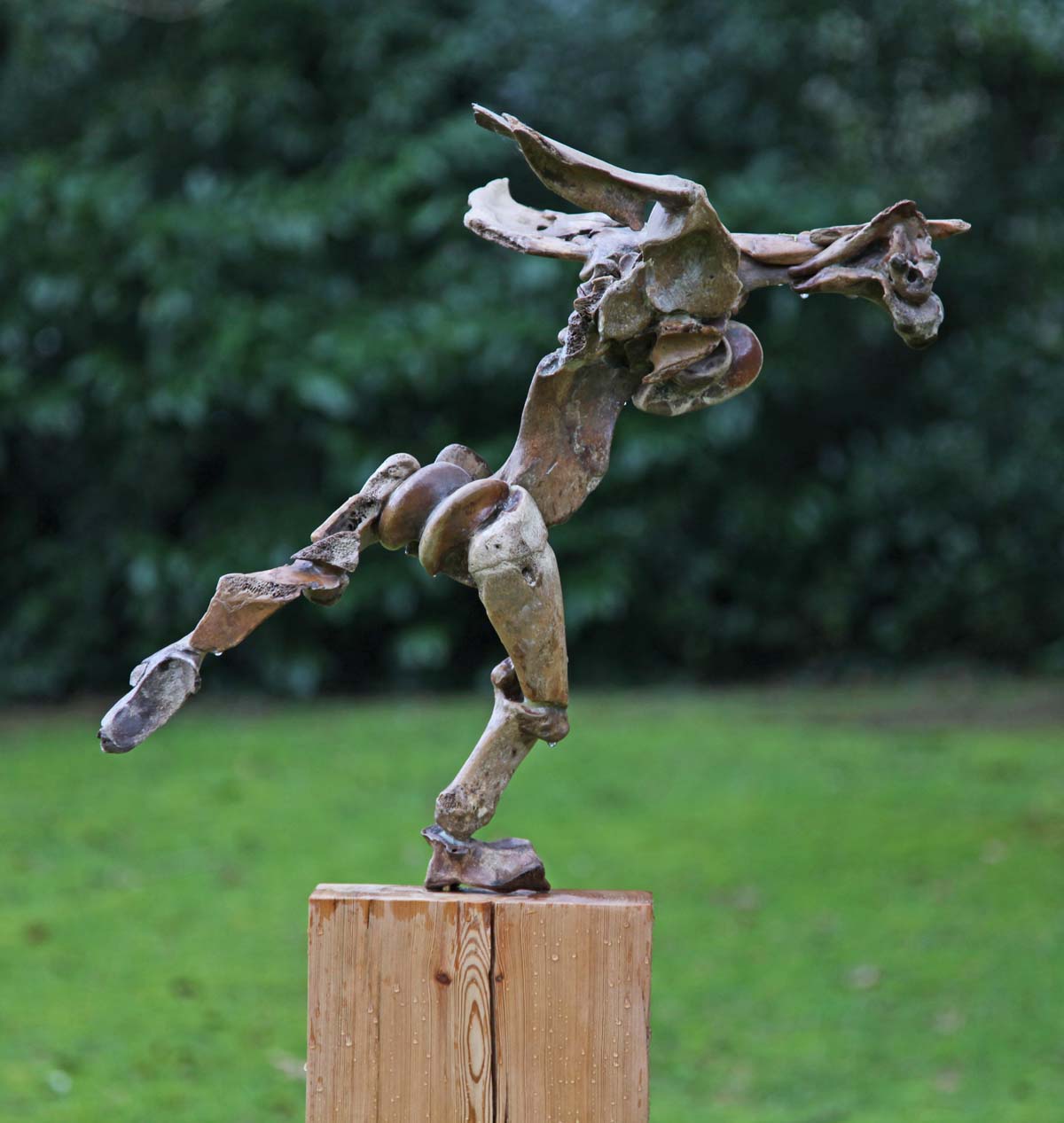
Bird Man by Austin Emery is a unique sculpture crafted from bones salvaged from the River Thames. It stands 95 cm high. The work depicts a figure in mid-run, frozen in motion. Immediately, the composition captures attention through its unusual material and dynamic form.
The bones interlock to create a skeletal framework that suggests speed and movement. At first glance, the figure appears fragile. Yet, the arrangement conveys strength and balance. Moreover, the abstracted form emphasizes motion rather than anatomical precision. The limbs stretch forward and back, giving a sense of urgent momentum.
Emery carefully selects and positions each bone, turning discarded material into art. Consequently, the piece bridges the organic past and the present moment of the figure’s motion. The rough textures of the bones contrast with the elegance of the human form. Furthermore, the work invites viewers to consider themes of life, mortality, and transformation.
Transitioning around the sculpture, one notices the delicate interplay of space and shape. Shadows and light shift across the surfaces, enhancing the sense of movement. Additionally, the use of salvaged bones adds historical and emotional layers to the work, connecting it to the river and its hidden stories.
Overall, Bird Man combines abstraction, narrative, and materiality. Through careful composition and innovative use of bones, Emery creates a sculpture that feels both ephemeral and powerful. It is a striking tribute to motion, resilience, and artistic ingenuity.
Delivery & Installation
The Sculpture Park will be in contact after purchase to arrange a delivery date. Delivery will require at least 1 person, which will be provided by The Sculpture Park wherever possible. We can provide an installation service upon request, email Sian at sian@thesculpturepark.com to discuss details. Delivery and installation will be provided by The Sculpture Park for mainland Great Britain, excluding the Channel Islands, Scottish Highlands and Republic of Ireland. A mainland courier company will handle any onward shipping.
We can provide a suitable sculpture plinth for an extra charge, please enquire for details. Experienced professionals handle all our sculptures, ensuring safe delivery and proper installation.
This piece is currently available for viewing at the park. Additional images, videos, measurements, and details can be provided upon request.


